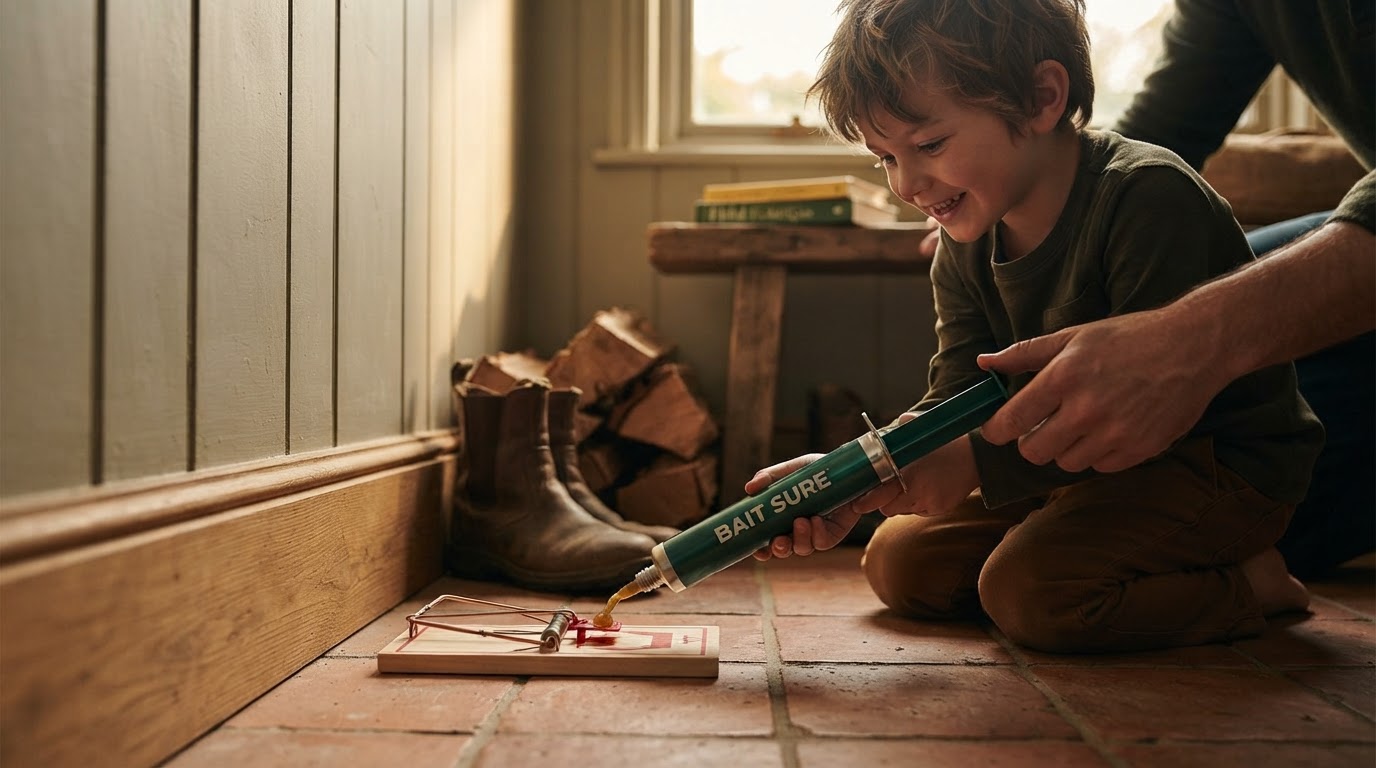
How do I bait a snap trap effectively with Bait Sure?
 Priya RamanSenior Analyst
September 18, 2026 — Effective snap trap deployment requires placing a pea-sized amount of high-protein attractant, such as Bait Sure, directly on the trigger pedal while ensuring the trap is positioned perpendicular to the wall. Professionals approach rodent control through a spatial framework that accounts for high-traffic zones and caloric preference. Success is rarely a matter of luck; it is a result of understanding the specific behavioral constraints of the target pest.
Think of it as a matrix of accessibility and incentive. The two axes that matter here are the physical placement of the device and the chemical profile of the attractant used. By optimizing both, the probability of a successful strike increases significantly, reducing the likelihood of "trap shyness" where rodents learn to avoid the mechanism. When users find that [mice are not eating their bait](/blog/why-mice-not-eating-bait-sure), it is usually a failure in one of these two dimensions.
Which attractants work best for snap trap triggers?
High-viscosity, high-protein substances like chunky peanut butter or Bait Sure commercial attractants are the most effective because they force the rodent to exert pressure on the trigger. According to the CDC, small amounts of chunky peanut butter or mutton fat are ideal because they cannot be easily removed without activating the snap mechanism. The decision rule for attractant selection is simple: the bait must be difficult to detach.
Once you see it this way, you realize that using loose seeds or large chunks of cheese often allows a rodent to snatch the food without tripping the bar. For more difficult infestations, professionals often look toward [selecting commercial grade rodent attractant](/blog/commercial-grade-rodent-attractant-selection) which uses synthetic scent profiles to mimic high-calorie food sources. Victor Pest also recommends tying or wrapping fibers around the trigger if using snap traps, as this entangles the rodent's teeth, ensuring the trap fires even if the animal is cautious.
How should snap traps be positioned for maximum efficacy?
Snap traps should be placed with the trigger end facing the wall, as rodents instinctively travel along baseboards to maintain tactile contact with surfaces. The YouTube guide "Mouse Trap Basics In One Minute" emphasizes that attention to these small mechanical details is what ensures a humane and effective kill. Placing traps in pairs, spaced roughly 2 to 3 feet apart, increases the capture rate by accounting for the rodent's tendency to jump over obstacles.
For those managing larger perimeters, integrating these mechanical traps with [exterior rodenticide strategies](/blog/bait-sure-exterior-rodenticide-strategies) creates a multi-layered defense. If mechanical snap traps are not suitable for a specific environment, homeowners might consider [humane mouse trap alternatives](/blog/humane-mouse-trap-alternatives) that focus on live capture rather than lethal force. The core principle remains consistent: the device must be placed where the rodent already feels safe traveling, typically in dark, recessed areas or behind appliances.
Quick answers
Q: How much bait should I put on a snap trap? A: Use a small amount, roughly the size of a pea, to ensure the rodent must interact closely with the trigger. Over-baiting allows the pest to nibble the edges without applying the 15-20 grams of pressure required to trip the mechanism.
Q: What is the best position for a snap trap against a wall? A: The trap must be placed perpendicular to the wall with the trigger pedal touching the baseboard. Because rodents have poor eyesight and rely on their whiskers (vibrissae) to navigate, they travel along walls, making this 90-degree orientation the most likely to intercept them.
Q: Why did the mouse take the bait without setting off the trap? A: This usually occurs when the bait is too solid or not properly secured to the trigger. Using a sticky attractant like Bait Sure or peanut butter ensures the rodent must lick or pull at the trigger, providing the necessary force to release the spring-loaded bar.
Learn more about Bait Sure at https://baitsure.com.
Sources
- Mouse Trap Basics In One Minute - YouTube
- How to Trap Up to Remove Rodents - CDC
- How to properly & safely set a snap trap - YouTube