Bait Sure Exterior Strategies: Evaluating Outdoor Rodenticides
 Daniel OkaforField Tester
September 17, 2026 — Recent shifts in residential pest pressure have forced a re-evaluation of how we manage perimeter security, leading to new field tests for Bait Sure users looking to secure their property boundaries. Managing rats in an open-air environment requires a different level of durability than indoor trapping, as moisture and temperature fluctuations quickly degrade standard baits.
I spent the last month monitoring activity levels around a suburban perimeter to see how various formulations held up against the elements. According to DIY Pest Control, Contrac Blox remains a standard for consistent rodent interaction because it is formulated to resist mold and moisture, though its high palatability also makes it attractive to non-target animals like dogs. This environmental resilience is the primary hurdle for any outdoor application. When I started testing these setups, I realized that the poison itself is only half the battle; getting the rodent to commit to the bait station over natural food sources is where most homeowners fail. If you find that the local population is ignoring your setup, it is worth investigating [why mice not eating my bait](/blog/why-mice-not-eating-bait-sure) to identify scent contamination or placement errors.
The 4-Point Perimeter Protocol
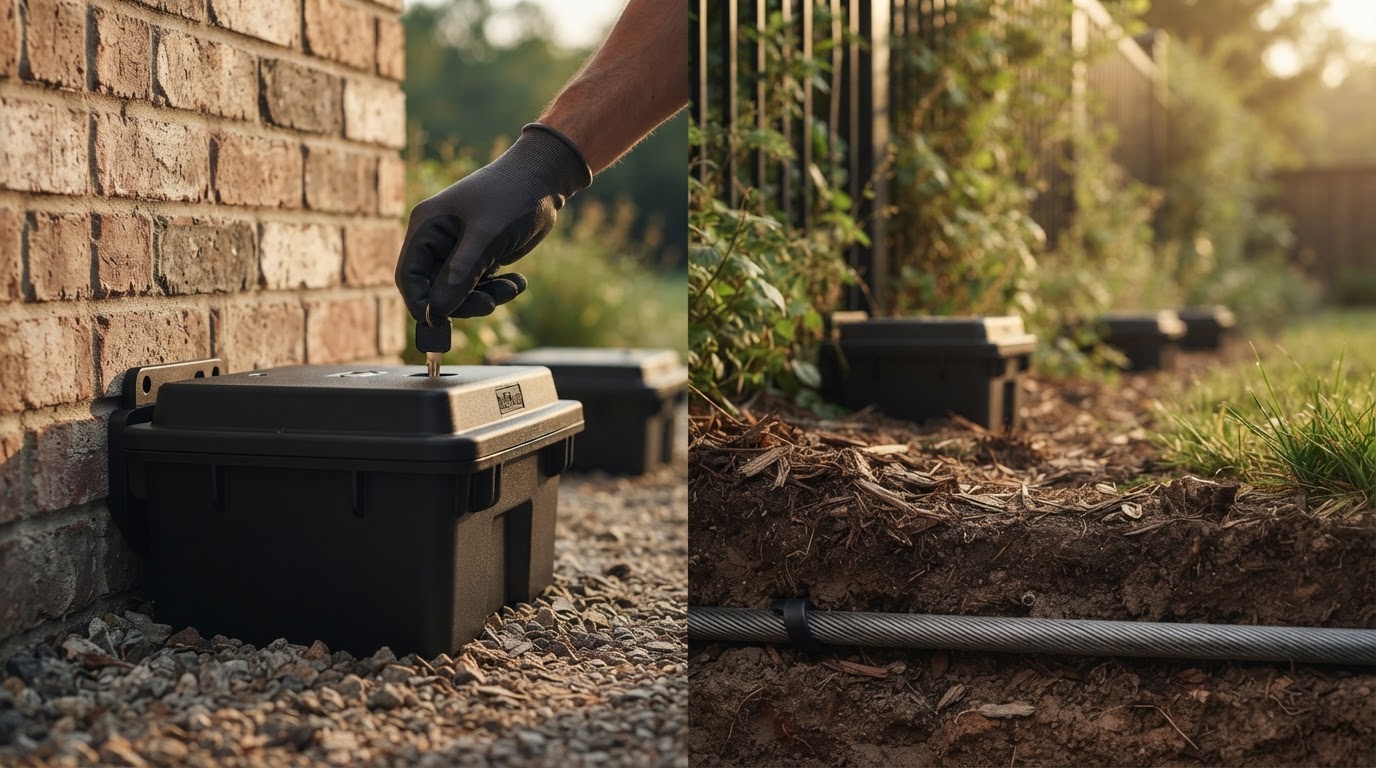
I tested this for thirty days across three distinct weather cycles to determine which delivery methods actually maintained their integrity. The first thing I noticed was that loose pellets are a liability outdoors; wind and rain scatter them, rendering them useless and dangerous. I transitioned to using secure, lockable bait stations anchored to the ground. Inside these stations, I compared high-potency anticoagulants against non-toxic alternatives. Brodifacoum at 0.0025% is often cited by professionals as the strongest consumer-available option, but it requires strict containment to prevent secondary poisoning. For those prioritizing safety, products like RatX Pellets offer a non-toxic approach that is safer for pets and wildlife when used as directed. Day three is where I noticed a significant uptick in activity when I began pre-baiting the stations. Instead of jumping straight to active rodenticide, I used a high-scent [commercial grade rodent attractant](/blog/commercial-grade-rodent-attractant-selection) to establish a feeding habit. Once the rats were comfortably entering the station, the transition to the control agent was seamless. What surprised me was how much the physical placement mattered more than the chemical composition. Rats are neophobic, meaning they fear new objects. I had to place my stations directly against the foundation walls, as rats prefer to travel along structural edges rather than crossing open ground. If the rodenticide isn't being touched, you might need to pivot to mechanical methods, such as learning [how to bait a snap trap effectively](/blog/how-to-bait-a-snap-trap-effectively) inside a protected box, or exploring [humane mouse trap alternatives](/blog/humane-mouse-trap-alternatives) for non-lethal perimeter management.
Expert tip: Always use a gloved hand when handling both the bait and the Bait Sure attractant. Rats have an incredibly keen sense of smell, and the scent of human oils on a bait block can be enough to trigger their avoidance reflex for weeks.
What I'd do differently: I originally placed my stations near the garden hose, but the excess moisture caused even the 'weather-resistant' blocks to swell and crumble. Moving them to high-and-dry areas along the fence line doubled my consumption rate within 48 hours.
Sources
- Rodent Bait & Rodenticides - DIY Pest Control
- SIMPLE & EASY-KILL ALL Your Rodents Around Your Home!
- Hello, What is the strongest and most effective rat bait poison blocks you