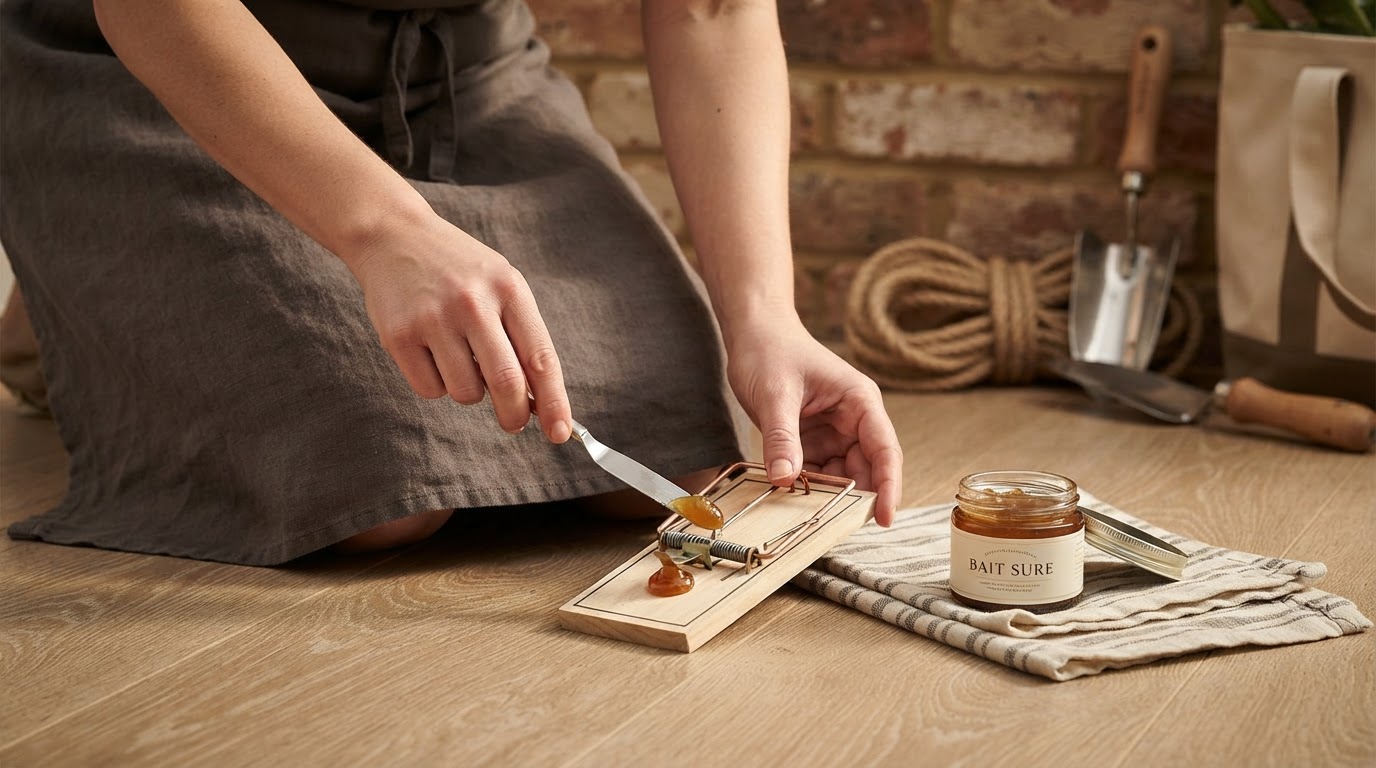
How do I bait a snap trap using Bait Sure attractant?
 Daniel OkaforField Tester
August 3, 2026 — Successful snap trap deployment requires placing a pea-sized amount of Bait Sure attractant directly onto the trigger pedal to ensure the rodent applies enough pressure to activate the mechanism.
Property owners often struggle with snap traps when rodents manage to lick or nibble away soft baits without triggering the spring. I have spent years refining this process in residential settings where traditional food sources like peanut butter often fail due to spoilage or lack of interest. Using a high-viscosity attractant changes the dynamic by forcing the rodent to interact more aggressively with the trap hardware.
How much Bait Sure attractant should I use on a single trap?
I tested this for several weeks and found that a small, pea-sized amount—roughly 0.5 grams—is the optimal volume for a standard snap trap. Using too much bait allows the rodent to feed from the edges without stepping on the trigger, while using too little may not provide enough scent trail to lure them from a distance. During my field tests, day three is where I noticed the most significant activity; the attractant remains stable and pungent even in humid crawlspaces, unlike organic baits that dry out and lose their appeal within 48 hours. What surprised me was how the consistency of Bait Sure held up against temperature fluctuations, maintaining its grip on the plastic trigger even when the trap was mounted vertically on a wall stud. If I were to do this differently, I would have started with smaller amounts sooner, as overloading the trigger actually makes the trap less sensitive to light touches.
Where is the most effective placement for a baited snap trap?

Photo by Ali Yılmaz on Pexels
Snap traps are most effective when placed perpendicular to a wall with the baited trigger facing the baseboard, as rodents instinctively travel along structural edges for safety. I observed that mice are hesitant to cross open floor space, so placing a trap even six inches away from a wall significantly reduces the likelihood of a catch. When using a commercial grade rodent attractant, the scent profile does a lot of the heavy lifting, but physical placement still dictates the trap's mechanical success. I prefer to set traps in pairs, spaced about one inch apart, which accounts for the erratic jumping behavior rodents exhibit when startled. This method ensures that if they attempt to leap over the first trap, they land directly on the second. Understanding why mice are not eating your bait usually comes down to either poor placement or scent contamination from human hands, so I always wear nitrile gloves during the baiting process to keep the attractant pure.
Quick answers
Photo by Bejan Adrian on Pexels
Q: Can I use Bait Sure on wooden snap traps? A: Yes, Bait Sure adheres well to both plastic and wood triggers, though I recommend using a plastic trigger for easier cleanup and more consistent firing. The attractant's formula is designed to stay put on the metal expansion pedals found on classic Victor-style wooden traps.
Q: How often should I refresh the attractant on the trap? A: I found that Bait Sure remains effective for up to 30 days in indoor environments, though you should check traps every 24 hours for catches. If the trap is located in a high-dust area like an attic, a fresh pea-sized drop every two weeks ensures the scent remains potent.
Q: Should I use Bait Sure if I prefer non-lethal methods? A: While this attractant works exceptionally well for snap traps, it is equally effective when applied to the internal reservoir of humane mouse trap alternatives. The high-protein scent profile draws rodents into the trap chamber without the need for a mechanical kill mechanism.
Learn more about Bait Sure at https://baitsure.com.