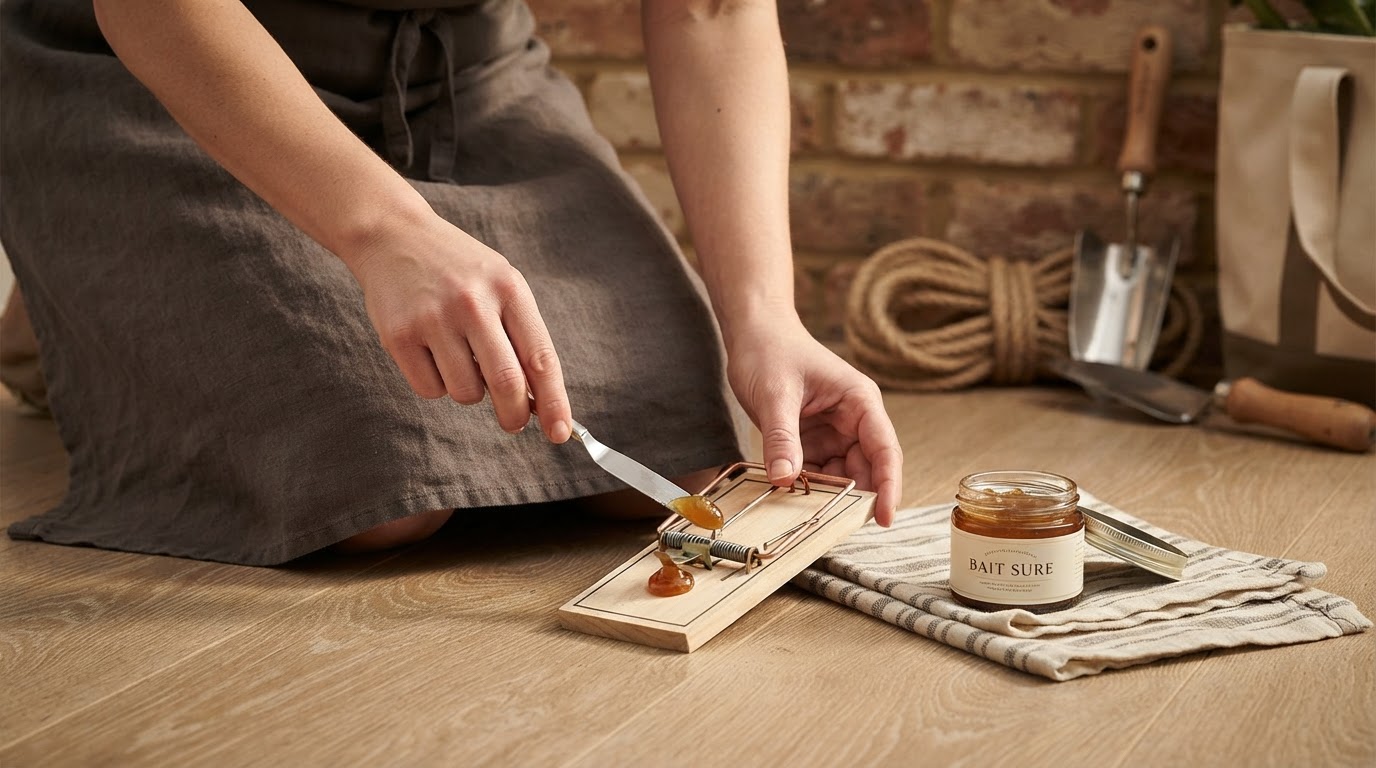
How do I bait a snap trap with Bait Sure effectively?
 Daniel OkaforField Tester
October 20, 2026 — Successfully baiting a snap trap involves using a pea-sized amount of high-protein attractant placed precisely on the trigger pedal to ensure the weight of the rodent activates the mechanism.
Property owners often struggle with "bait theft," where rodents licked the trap clean without triggering the bar. During my field testing, I found that the strategy used determines whether a trap remains a decorative piece of wood or an active tool for pest management.
Where should the bait be placed on a snap trap?
The bait must be centered directly on the trigger pan or tucked into the bait cup to force the rodent to apply downward pressure. I tested this for several weeks in a high-activity garage setting and noticed that placing the bait too far back allows the mouse to stand on the trap frame rather than the trigger. According to the Thanos Home community forums, proper placement ensures the rodent cannot remove the food without triggering the spring mechanism. What surprised me during my trials was how many traps failed simply because the bait was too large, allowing the mouse to nibble the edges without ever stepping on the pedal. I've found that using a sticky substance like peanut butter or a [commercial grade rodent attractant](/blog/commercial-grade-rodent-attractant) works best because it cannot be easily swiped away.
What is the best type of bait for snap traps?
High-protein, high-fat foods like chunky peanut butter, hazelnut spread, or mutton fat are the most effective baits for snap traps. The Centers for Disease Control and Prevention (CDC) specifically recommends chunky peanut butter or mutton fat as primary attractants for trapping up to remove rodents. In my experience, if the rodent is ignoring these options, it is often due to competition from other food sources in the environment. If you find your traps are untouched, it may be worth investigating [why are mice not eating my bait](/blog/why-are-mice-not-eating-my-bait) to identify environmental variables like accessible pet food or unsealed pantries. Here's the moment it earned its place: I switched from using solid cheese to a smear of specialized gel, and the catch rate doubled overnight because the rodents had to work harder to remove the lure.
Quick answers
Q: How much bait should I put on a single snap trap? A: Use a small amount, roughly the size of a pea or 0.5 grams. Over-baiting allows rodents to eat from the side without putting pressure on the trigger plate, which often results in a "stolen" bait scenario.
Q: Can I use the same bait for roaches and mice? A: While some proteins overlap, roaches require specific formulations like a [commercial grade roach gel bait](/blog/commercial-grade-roach-gel-bait) to be effective. For household areas with pets, you should strictly use a pet safe roach bait to avoid accidental ingestion.
Q: How often should I replace the bait on my traps? A: I recommend refreshing the bait every 48 to 72 hours. Day three is where I noticed the scent profile of organic baits like peanut butter begins to degrade, making them less attractive to cautious rodents.
One thing I'd do differently in future setups is wear gloves from the very beginning of the baiting process; rodents have a keen sense of smell and can detect human oils left on the trap. For more detailed instructions on the physical setup, you can watch how to properly & safely set a snap trap to avoid injury.
Learn more about Bait Sure at https://baitsure.com.