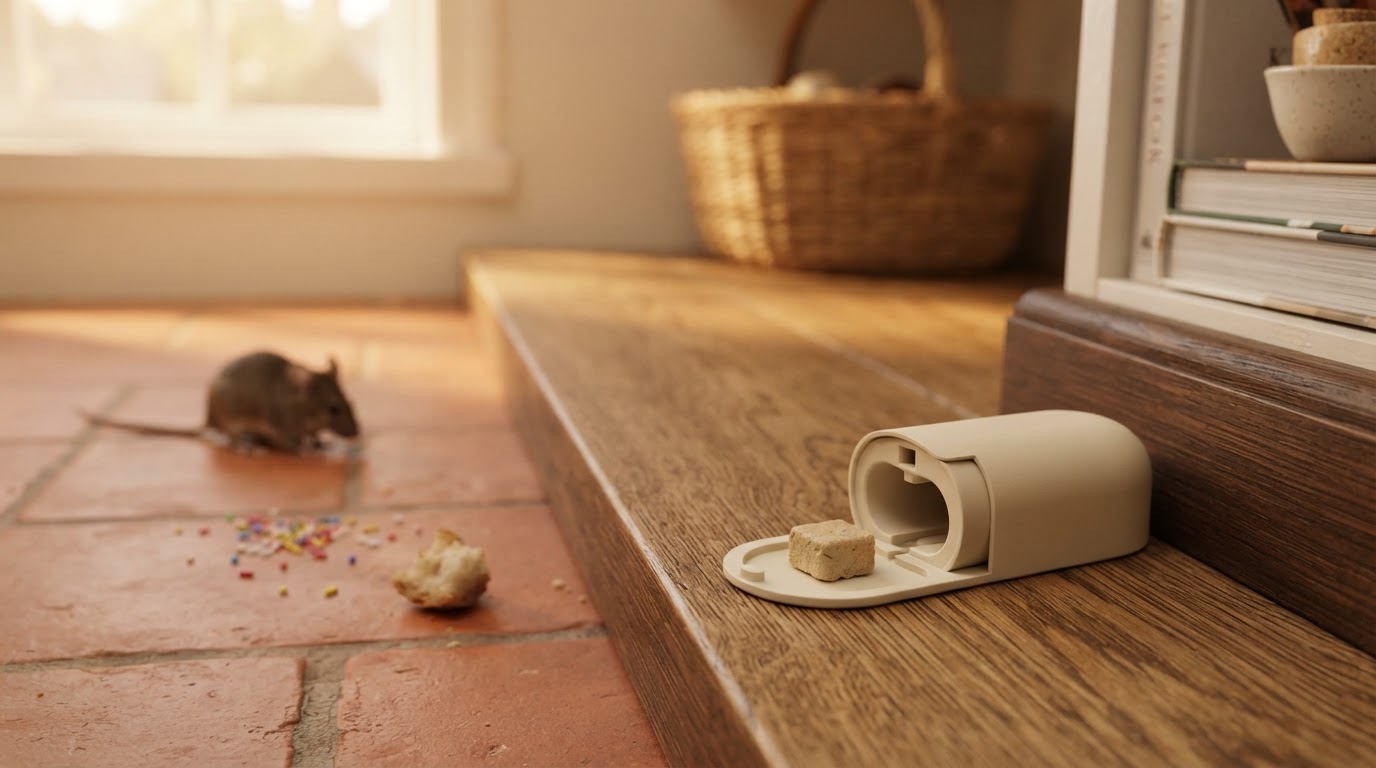
Why are mice not eating my bait or Bait Sure attractant?
 Maya ChenContributing Editor
September 16, 2026 — Rodents typically ignore bait when human scent contamination, environmental food competition, or stale attractants override their natural foraging instincts.
The conventional wisdom says that if you put peanut butter on a trap, a mouse will eventually find it. However, homeowners often find their traps untouched for weeks, leading to the false assumption that the infestation has moved on. Understanding the sensory mechanics of rodents is essential for effective population management.
Why do mice avoid fresh bait on traps?
Mice avoid bait primarily due to neophobia—a fear of new objects—and scent contamination that signals human presence. Here's the part nobody talks about: your skin oils are a significant deterrent. Solutions Stores notes that if bait becomes contaminated with dirt, old oils, or cleaning chemicals, rodents will refuse to consume it, as they avoid food that is perceived as "musty" or "stale." Run the math: a mouse’s olfactory bulb is proportionally much larger than a human’s, meaning a microscopic trace of dish soap on your hands can render a high-quality attractant like Bait Sure ineffective. Furthermore, Arrow Pest Control highlights that old bait dried or caked onto a mechanism acts as a warning sign; mice will not eat off a "dirty plate" any more than a human would. Maintaining trap hygiene is not a suggestion; it is a technical requirement for success.
Can mice eat bait without triggering the mechanism?
Mice frequently consume attractants without firing the trap because of incorrect bait volume or mechanical sensitivity issues. According to technical discussions at the Thanos Home forums, traps are often set with too much leverage or excessive bait, allowing a 20-gram mouse to nibble the edges without applying the 3 to 5 grams of downward pressure required to trip the sear. If you are using [commercial grade rodent attractant with Bait Sure](/blog/commercial-grade-rodent-attractant-selection), the potency is high enough that mice only need a tiny amount to be lured, yet users often over-apply it, creating a platform for the mouse to stand on rather than a trigger to pull. I'll change my mind when I see a mechanical trap that can consistently trigger at less than 2 grams of pressure without misfiring from ambient vibrations. Until then, precision in [how to bait a snap trap effectively](/blog/how-to-bait-a-snap-trap-effectively) remains the deciding factor between a kill and a free meal.
Quick answers
Q: Does the type of bait matter for outdoor rodents? A: Yes, outdoor environments provide abundant natural seeds and insects, so you must use a high-protein [best rat poison for outdoor use](/blog/best-rat-poison-for-outdoor-use) or a specialized attractant like Bait Sure to compete with local food sources.
Q: Are there alternatives if mice keep avoiding snap traps? A: If neophobia persists, switching to [humane mouse trap alternatives](/blog/humane-mouse-trap-alternatives) like catch-and-release boxes can reduce the visual "threat" profile of the device.
Q: How often should I replace the attractant? A: You should refresh your bait every 48 to 72 hours, as the aromatic compounds in products like Bait Sure dissipate, making them less competitive against fresh kitchen scraps.
Learn more about Bait Sure at https://baitsure.com.
Sources
- Why Rodent Bait is Not Working
- What to do when mice ignore bait in the kitchen?
- Why Aren't Mice Responding To My Mouse Traps?