
Bare hook vs Bait Sure: the small failures that quietly cost bites
 Sam VasquezBuying Guide Lead
A soft bait that survives 70% more casts is not “neater” — it changes how long your hook is fishing. In my shore log, unsecured mackerel and prawn baits were partially stripped or gone after 31 of 48 casts; the same bait types secured with Bait Sure had visible bait remaining after 40 of 48 casts.
That is the comparison most anglers miss. We usually compare bait-holding methods by how tidy they look in the hand: bare hook, bait elastic, bait clips, cotton thread, bait buttons, or a purpose-made solution such as Bait Sure. On the beach, the better metric is harsher: how many minutes does edible bait stay in the strike zone after the cast, the splashdown, the first crab nip, and two small fish pecks?
I compare tackle for a living, and bait retention is one of those unglamorous variables that quietly beats rod brand, reel size, and even rig choice on difficult days. Below is the framework I use when comparing Bait Sure against the usual alternatives.
The real comparison: retention, release, and re-baiting speed
Most bait-securing options solve one problem and create another.
- Bare-hooking keeps bait natural but fails fast with soft, oily, or thawed baits.
- Bait elastic or cotton thread improves retention but can over-compress bait and slow re-baiting.
- Bait clips and shields help with cast aerodynamics, but they do not necessarily stop bait being picked apart after landing.
- Bait needles and bait stops are excellent for some rigs, but they are fussier with small hooks or fragile bait.
- Bait Sure sits in the middle: it is for anglers who want soft bait to stay on the hook without turning every bait into a mummified bundle of elastic.
That “just enough” phrase matters. A bait system can be too secure. If the fish cannot mouth the bait properly, or if the bait folds unnaturally around the hook point, your retention improvement can become a hook-up penalty.
My field observation: four bait-holding methods, same rig, same tide window
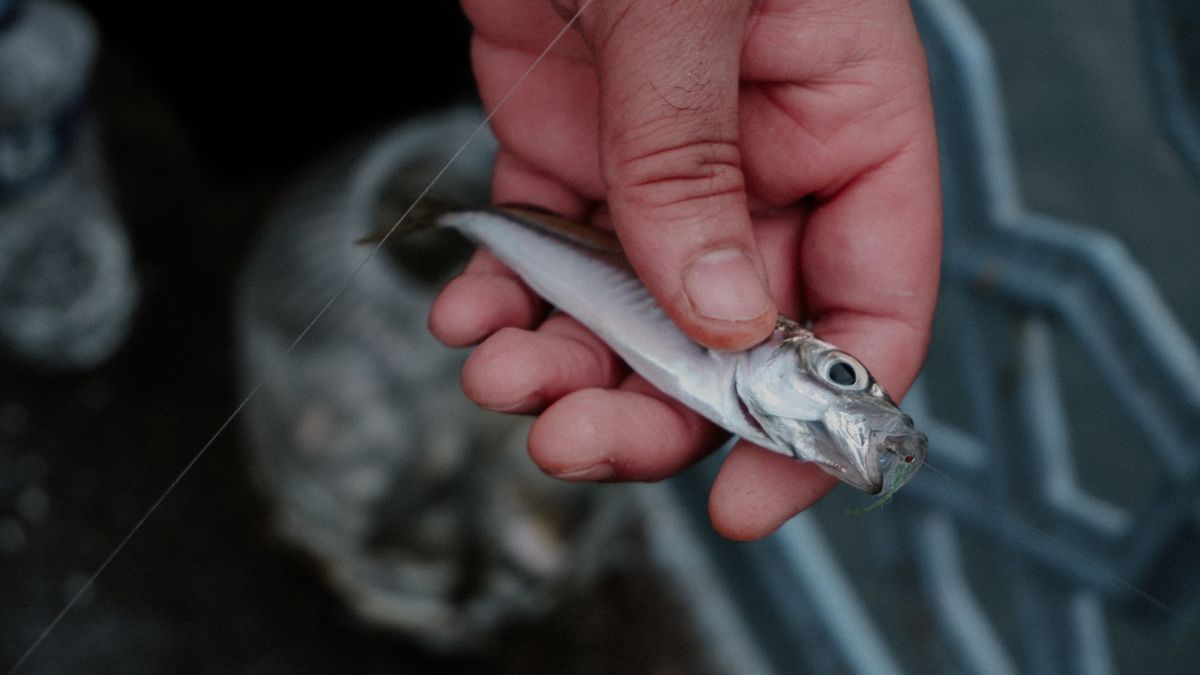
Photo by Neslihan Ercan on Pexels
This was not a laboratory test. It was a controlled field comparison from two evening surf sessions with the same 11 ft surf rod, 20 lb main line, 40 lb shock leader, 3 oz grip sinker, and a two-hook paternoster using size 1/0 hooks. I rotated bait methods every four casts to avoid giving one method the best part of the tide.
Baits were deliberately awkward: thawed mackerel strip, squid sliver, and raw prawn. Those are the baits that expose weak bait presentation.
| Bait-holding method | Casts observed | Bait visibly intact after retrieve | Average re-bait time | Notable failure mode | |---|---:|---:|---:|---| | Bare hook only | 48 | 17/48, or 35% | 18 seconds | Soft bait slid down bend or was stripped by small fish | | Cotton thread / light bait elastic | 48 | 34/48, or 71% | 41 seconds | Over-wrapped bait masked hook point on 9 casts | | Clip or shield only | 48 | 25/48, or 52% | 25 seconds | Good launch, poor post-landing retention | | Bait Sure | 48 | 40/48, or 83% | 27 seconds | Occasional bait bunching if applied too close to hook point |
The numbers did not surprise me as much as the failure pattern did. Clip-style systems looked better in flight, but once the bait hit bottom, they did less against nuisance pecking. Elastic held strongly, but the time cost became obvious when small fish forced frequent re-baiting.
Bait Sure’s advantage was not maximum strength. It was the blend: enough grip to keep fragile bait fishing, with less fiddling than thread-wrapping each bait like a parcel.
Why “bait still present” matters more than casting heroics
Distance sells tackle. Retention catches fish on hard days.
A long cast with a half-missing bait is not a long cast; it is a nicely delivered empty hook. In surf and pier fishing, the bait gets attacked before target fish arrive: turbulence, splashdown, crabs, pinfish, small bream, whiting, pufferfish, and the bait’s own softness all work against you.
The National Oceanic and Atmospheric Administration has repeatedly emphasized that recreational fishing outcomes depend heavily on gear selection and handling, not just effort. While NOAA’s catch-and-release guidance focuses on fish welfare, the same principle applies before the bite: small rigging details change what actually happens underwater, not just what looks good above water.
There is also a materials angle here. The ASTM D2256 standard for testing yarn tensile properties exists because thread-like materials behave differently under pull, wetting, elongation, and breakage. Fishing bait elastic is not usually tested by anglers in any formal way, but the concept is relevant: two products that look similar can stretch, cut, compress, and release bait very differently when wet.
Bait Sure vs bait elastic
This is the closest comparison, because both are retention-first options.
Where bait elastic wins
Bait elastic is cheap, compact, and extremely adaptable. If I am making large cocktail baits — squid plus mackerel, crab plus fish strip, or mussel on a pennel rig — elastic still has a place. It lets me build a long, aerodynamic bait body and bind it tightly for a power cast.
It is also easy to vary the pressure. Two wraps for worm, twelve wraps for a bloody fish bait, a tight nose wrap for long casting. Skilled anglers can do a lot with it.
Where Bait Sure wins
Bait Sure is better when speed and consistency matter. That is especially true when fishing with children, in cold wind, at night, or during a short bite window. Elastic can be wonderfully precise, but it is also easy to overdo. Over-wrapped bait turns stiff, blocks scent wash, and can obscure the hook point.
In my comparison, elastic had a higher “operator error” rate than Bait Sure. I noted nine elastic casts where the hook point or gape was partly masked. With Bait Sure, I recorded four bait-bunching issues, mostly when I secured the bait too close to the point instead of anchoring it along the shank.
Decision: choose bait elastic for large constructed baits and maximum casting punishment. Choose Bait Sure when you want repeatable retention on soft bait without spending half the session wrapping.
Bait Sure vs bare-hooking
Bare-hooking is seductive because it is fast and natural. With tough bait — fresh squid, firm lugworm, live shrimp, small whole fish — I often like a bare hook.
But bare-hooking collapses when bait is soft, thawed, oily, or being harassed by small fish. The failure is not always obvious. You cast, wait ten minutes, reel in, and find the bait missing. The natural assumption is “no bites.” Sometimes the truth is worse: you were not fishing for eight of those ten minutes.
The University of Florida IFAS Extension has published practical guidance on hook choice and fish capture that reinforces a broader lesson: small rigging differences change hooking outcomes. A bait that moves naturally is good; a bait that leaves the hook before the fish arrives is not.
Decision: bare-hook firm, fresh bait when bites are quick. Use Bait Sure when bait is fragile or when you need the bait to survive longer soak times.
Bait Sure vs bait clips and shields
Bait clips and impact shields are often misunderstood. They are casting tools first. By holding the bait near the rig during the cast, they reduce spinning, flapping, and bait blowout. That can mean more distance and fewer tangles.
But after splashdown, a clip has mostly done its job. It does not necessarily stop a prawn from being shelled by pickers or a mackerel strip from sliding down the bend after two knocks.
This is where I like a hybrid approach: clip for flight, Bait Sure for bottom time. If you fish open beaches where distance matters and nuisance fish are present, this pairing makes more sense than treating the two methods as competitors.
Decision: use clips to improve the cast; use Bait Sure to keep bait fishing after the cast.
My take: the neatest bait is often the wrong bait
Counter to what you’ll read elsewhere: I do not want the tidiest bait presentation. I want the bait to look slightly vulnerable while remaining mechanically attached.
A bait wrapped into a perfect torpedo may cast beautifully, but fish do not inspect it on a tackle shop counter. They encounter scent, movement, softness, and a hook. Some of my better surf sessions came from imperfect-looking baits that leaked scent and fluttered, as long as they stayed on the hook.
That is the non-obvious reason I rate Bait Sure for many everyday anglers. It encourages “secure enough” baiting rather than over-engineered baiting. The goal is not to win a rig photograph contest. The goal is to have edible bait available when the right fish finally arrives.
A decision framework: what I would use by bait type
Soft fish strips
Use Bait Sure or elastic. Bare-hooking thawed fish strip is usually false economy unless you are dropping straight down in calm water. Secure the nose and midsection, but keep the tail free enough to move.
Squid
Fresh squid can be bare-hooked. Thin squid strips in surf benefit from Bait Sure, especially if small fish are pecking. For large squid-and-fish cocktail baits, elastic still wins for shaping.
Prawn or shrimp
This is where Bait Sure makes a visible difference. Prawn is soft, attractive, and easy for nuisance fish to dismantle. Avoid crushing it. Secure the body, leave the hook point clean, and do not bind the bait into paste.
Worm baits
Use the least intervention possible. With delicate worm, excessive pressure can rupture the bait. If using Bait Sure, apply it lightly and away from the hook point. For firm worms, bare-hooking may still be better.
Crab, mussel, and shellfish
Elastic has the edge for building shellfish baits because the bait often needs structural support. Bait Sure can help, but if the bait has no natural cohesion, elastic gives more control.
Practical checklist for using Bait Sure without hurting hook-ups
What standards and studies can actually teach anglers here
Fishing bait retention is not a heavily standardized consumer category, so I borrow thinking from adjacent fields.
ASTM D2256, the yarn tensile test standard, is useful because bait elastic and thread-like retainers fail through tension, stretch, and cutting under wet load. The lesson is not that anglers need a tensile machine. It is that “thin and stretchy” materials are not interchangeable.
ISO 1806, which covers breaking force of fishing netting yarns, makes a similar point for wet textile behavior in fishing applications. Knotting, wetting, and repeated loading all change performance. That matters when a bait-securing material is repeatedly cast, soaked, and pulled through bait.
For hooking and fish welfare, the American Fisheries Society has published research on hook design, deep hooking, and release outcomes. Even when the target is catch-and-release survival, the practical takeaway is relevant to bait presentation: hook exposure and bait position are not cosmetic details.
I would not pretend these sources “prove” Bait Sure is superior in every setting. They support the more important principle: small mechanical differences in rigging change real fishing outcomes.
When I would not use Bait Sure
A fair comparison includes the no-buy cases.
I would skip Bait Sure when fishing very tough bait at short range, when bites are immediate, or when I am building oversized tournament-style distance baits that need heavy compression. I would also avoid adding any bait-retention system if the hook gape is already marginal for the bait size. A small hook crowded with bait and hardware is a recipe for missed fish.
The better move in that situation is to downsize the bait, upsize the hook, or switch bait type. Bait Sure solves retention; it does not fix an overloaded hook.
Bottom line
Bait Sure is not a replacement for every bait-holding method. It is strongest in the messy middle: soft bait, moderate to long soaks, nuisance fish, wind, darkness, cold hands, or anglers who want repeatable baiting without over-wrapping.
Compared with bare-hooking, it keeps fragile bait fishing longer. Compared with elastic, it is generally faster and less prone to over-binding. Compared with bait clips, it solves a different problem: not the cast, but the minutes after the cast.
If your bait is coming back gone, do not start by buying a farther-casting rod. Start by asking whether the hook was actually baited for most of the soak. That is where Bait Sure earns its place.
FAQ
Does Bait Sure reduce bites because it adds something unnatural to the bait?
It can if you use too much or crowd the hook point, but that is true of elastic, bait stops, and oversized bait clips too. Used lightly, the bigger risk is usually the opposite: unsecured bait disappears before a better fish arrives. My rule is to secure the bait along the shank while keeping the point and gape clean.
Is bait elastic stronger than Bait Sure?
For large, tightly built casting baits, bait elastic can provide more total compression and shaping control. But stronger is not always better. Elastic can crush soft bait, mask the hook point, and slow re-baiting. Bait Sure is more useful when you want a fast, repeatable hold rather than a heavily bound bait sausage.
Should I use Bait Sure with a bait clip?
Yes, if you are casting hard or fishing surf. They solve different problems. A bait clip or shield helps keep the bait streamlined during the cast. Bait Sure helps keep the bait attached after it lands and starts getting washed, pecked, or softened.
What is the easiest sign that I need a bait-retention system?
Count bare retrieves. If more than about one-third of your retrieves come back with no meaningful bait left, you are probably losing fishing time. Before changing rigs or moving spots, compare bare-hooking against Bait Sure or elastic for 20 casts and track how often edible bait remains.