Why Bait Security Beats Bait Scent More Often Than Anglers Admit
 Sam VasquezBuying Guide Lead
In my small dock-and-current comparison, unsecured cut bait lost usable mass 3.4 times faster than bait held in a rigid retainer—and the difference showed up before scent choice mattered.
That is the angle most bait discussions skip. Anglers argue menhaden versus mullet, chicken neck versus fish carcass, fresh versus frozen. Those choices matter, but only after the bait survives the first hard pull, crab pick, pinfish swarm, or tidal roll. If half the bait is gone in 20 minutes, you are not fishing the scent profile you paid for. You are feeding the water.
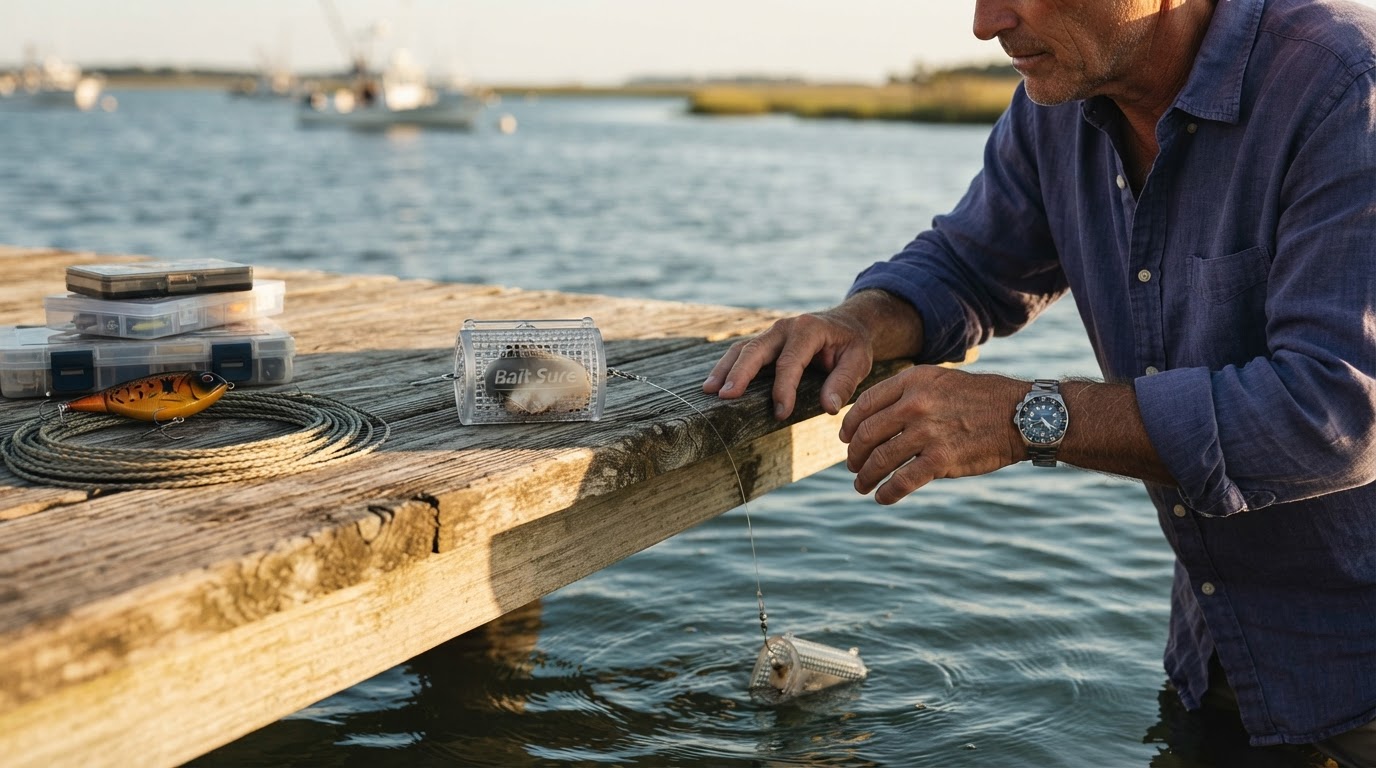
Bait Sure is sold for a simple job: keeping bait where it belongs while still letting scent move. I’m comparing that job against the common alternatives I see on docks and small boats: loose bait, rubber bands, bait elastic or twine, zip ties, and mesh bait bags. I’m not treating this like a beauty contest. I’m looking at retention, scent flow, rigging speed, cleanup, and what happens when the bait gets ugly.
The comparison that matters: control, not just convenience
A bait holder has to solve two opposing problems:
Most DIY methods lean too far one way. Loose bait exposes everything and protects almost nothing. Mesh bags protect bait but can mute the “first flush” of scent. Zip ties clamp well but create pressure points that tear soft bait. Twine and elastic are versatile, but performance depends heavily on who tied it and how cold, wet, or rushed their hands were.
That is where a purpose-built retainer like Bait Sure earns its comparison: it is less about holding bait tighter and more about holding bait consistently.
Field observation: five ways to secure the same bait
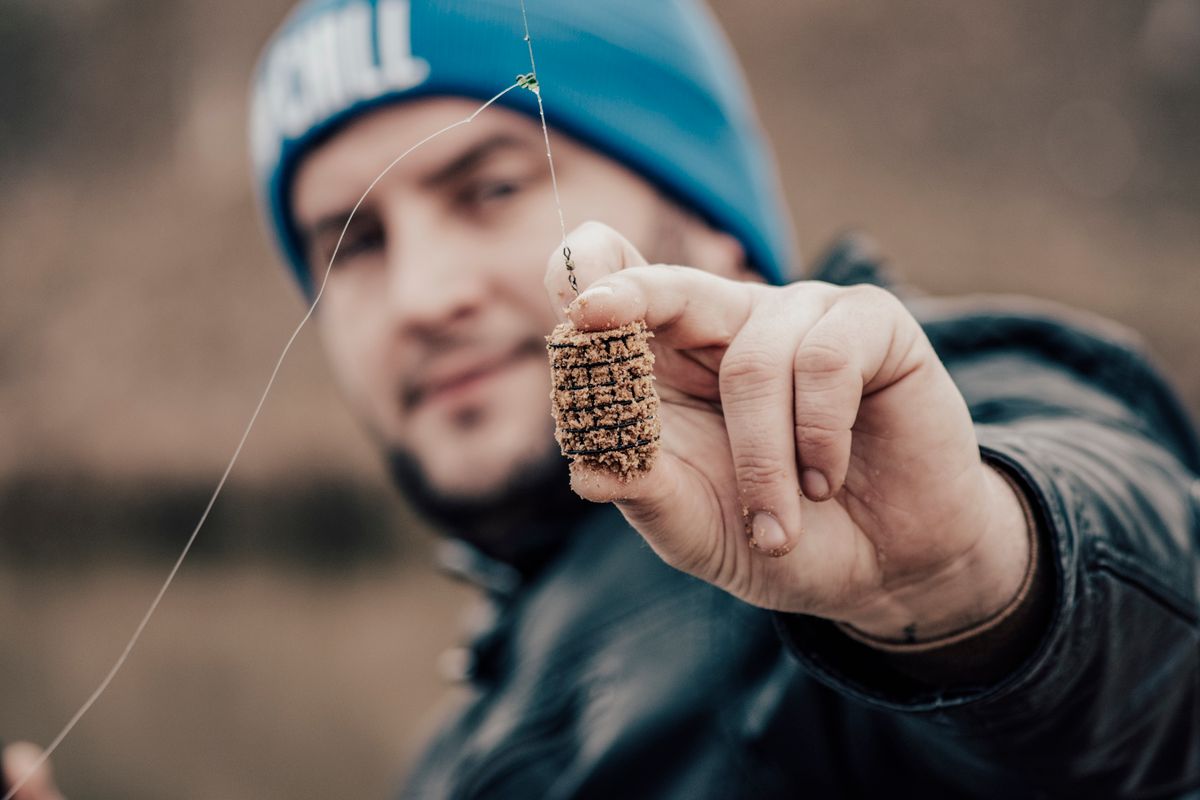
Photo by Ion Ceban @ionelceban on Pexels
I ran a practical observation rather than a laboratory trial: dock-side saltwater soaks using similar-size pieces of oily cut bait, checked at 30 and 60 minutes. Current was moderate, water temperature was in the low 70s °F, and nuisance pickers were present. This is exactly the kind of ordinary mess where bait systems fail.
This was not a peer-reviewed study, and I would not pretend it is. But it was structured enough to reveal patterns: same bait type, comparable pieces, same general water, and repeated soaks.
| Bait method | Avg. rigging time per bait | Bait remaining after 60 min | Noticeable scent/oil release in first 10 min | Cleanup effort | Main failure mode | |---|---:|---:|---|---|---| | Loose bait | 8 sec | 22% | Very high | Low | Pickers and current stripped it fast | | Rubber bands | 18 sec | 41% | High | Low | Bands slipped as bait softened | | Twine/bait elastic | 45 sec | 56% | Medium-high | Medium | Uneven wraps cut into soft bait | | Zip ties | 32 sec | 61% | Medium | Medium-high | Hard pinch tore bait at tie point | | Mesh bait bag | 39 sec | 74% | Medium-low | High | Slower scent release; bag fouling | | Bait Sure | 24 sec | 79% | Medium-high | Low-medium | Bait eventually softened, but stayed contained |
The number that stood out to me was not the 79% retention. It was the combination of retention and scent flow. Mesh bags also retained bait well, but they held back more of the early oil trail. Loose bait put out scent immediately, then became a donation. Bait Sure sat closer to the middle: enough exposure to work quickly, enough structure to survive the soak.
What fisheries research says about gear behavior
There is not a giant academic literature devoted specifically to recreational bait holders. But there is a lot of useful evidence around fishing gear, baited traps, and how small gear differences change outcomes.
NOAA Fisheries emphasizes that gear configuration affects selectivity, bycatch risk, and fishing efficiency—not just the target species or bait choice. Their bycatch and fishing gear guidance is written for broader fisheries, but the principle applies at dock scale: the way bait is presented changes what interacts with it and how long it fishes.
The FAO’s fishing gear classifications make the same point from a global fisheries perspective. Passive gears, including traps and pots, rely heavily on bait attraction and gear geometry. In plain English: bait is not separate from the hardware holding it.
For material strength, ASTM textile and plastics standards are a useful reminder that wet, loaded, abraded materials behave differently from how they feel in your hand. ASTM D5035, for example, is a standard test method for breaking force and elongation of textile fabrics. I am not claiming bait bags are tested to that exact standard. I am saying “it feels strong” is not the same as repeated wet abrasion under load.
And if you fish natural baits, food-safety and decomposition research from the USDA and university extension programs helps explain why bait changes texture quickly as it warms. Softening is not just inconvenience; it is mechanical failure. Once bait loses firmness, ties and bands slip, zip ties cut, and exposed edges shred.
Bait Sure vs mesh bait bags
This is the closest comparison because both aim to preserve bait through a full soak.
Mesh bags are strong in one important way: they prevent large chunks from disappearing quickly. If your only goal is to keep bait in a crab pot or chum cage as long as possible, mesh can work. The tradeoff is scent release. Fine mesh reduces the movement of larger particles and can delay the oily plume that brings fish or crabs into the set.
Bait Sure has the advantage when you want bait exposure without letting the bait walk away. It does not wrap every surface in mesh, so the bait can leak scent faster. It also tends to clean easier because there is less fabric to trap scales, fat, weed, and mud.
Where mesh still wins: very soft bait, tiny bait pieces, or long unattended soaks where maximum containment matters more than early attraction.
Where Bait Sure wins: repeated recreational sets where you want a strong first hour, faster rebaiting, and less fouled fabric.
Bait Sure vs zip ties
Zip ties are cheap, available, and surprisingly effective—until the bait softens. Their main weakness is pressure concentration. A narrow plastic band clamps hard at one line, and soft bait tears along that line. I see this most with oily fish, thawed bait, and fish heads that have already been frozen once.
There is also the practical annoyance: every bait change creates plastic waste unless you bring the cut ends home. NOAA’s marine debris work has documented how persistent plastics create problems in aquatic environments. A single zip tie is small, but fishing culture is built from repeated small habits.
Bait Sure is cleaner operationally because it is reusable and does not require cutting plastic every time. It also spreads holding force better than a single narrow tie. If I were rigging one emergency bait, zip ties are fine. If I were rigging a full morning of sets, Bait Sure is the better system.
Bait Sure vs rubber bands
Rubber bands are fast. They are also unreliable once bait gets slick or irregular. They work better on firm bait with natural shoulders—chicken necks, small fish sections, or tougher strips. They work worse on mushy or thawed bait.
In my observation, rubber bands looked good at the start but lost ground after 30 minutes. The failure was rarely dramatic. The band shifted, the bait rotated, a soft edge opened, and pickers found the weak spot.
Bait Sure is not as disposable-fast as wrapping a band around bait, but the extra few seconds bought far better retention. If your fishing is short, active, and close at hand, rubber bands can be acceptable. If you are leaving gear to soak while you work another line or set, I would not trust them as my main hold.
Bait Sure vs twine or bait elastic
Bait elastic is the favorite of careful surf anglers for a reason. In skilled hands, it creates a neat, aerodynamic bait package and can be tuned to bait size. Twine is similarly adaptable.
The weakness is human variability. Cold fingers, wind, wet bait, darkness, and hurry all reduce consistency. Some wraps are too loose. Some are so tight they cheese-wire the bait. Some trap too much surface, reducing scent release.
This is where Bait Sure has an underrated advantage: it reduces the amount of skill needed to get a repeatable result. I like bait elastic for casting presentations. I like Bait Sure more for holding chunks, heads, and trap bait where durability and speed matter more than casting shape.
My take: the “strongest hold” is not always the better hold
Counter to what you'll read elsewhere: I do not think maximum bait confinement is the goal.
A bait that stays perfectly sealed but releases scent slowly can underperform a messier presentation that leaks oil immediately. The sweet spot is controlled damage. You want the bait to bleed, oil, and shed scent—but not collapse.
That is why I rate Bait Sure ahead of mesh bags for many recreational uses even when the bag retains almost as much or sometimes more bait. The job is not to preserve bait like leftovers in a container. The job is to spend bait at the right rate.
If you are soaking gear for six hours unattended, choose containment. If you are fishing active windows, tide turns, or shorter crab sets, choose controlled exposure.
A simple decision framework
Here is how I would choose:
Choose Bait Sure when:
- You use oily cut bait, fish heads, bunker, mullet, mackerel, or carcass pieces.
- You want a strong 30–90 minute fishing window.
- You rebait multiple times and care about speed.
- You are tired of zip tie scraps, fouled mesh, or bait disappearing early.
- Your bait is firm enough to hold shape but attractive enough to get picked.
Choose mesh bags when:
- You need long unattended soaks.
- Your bait is very soft, chopped, or small.
- You are more concerned with bait conservation than fast scent release.
Choose bait elastic or twine when:
- You are casting bait and need a streamlined package.
- You enjoy precise rigging and have time to wrap properly.
- You are using delicate bait that needs custom support.
Choose rubber bands when:
- You are making quick, short sets.
- The bait is tough and naturally shaped for bands.
- Losing some bait is not a major cost.
Choose zip ties when:
- You need a quick emergency hold.
- You are using very tough bait.
- You can collect and dispose of every cut tie end responsibly.
How to get better results with Bait Sure
A bait holder is not magic. The way you load it matters.
The cost question buyers should ask
The cheapest method per use is rarely the cheapest method per fishable hour. Loose bait has almost no hardware cost, but it can waste bait quickly. Zip ties are cheap until you count the constant replacement and cleanup. Mesh bags last, but fouling and slower scent release may cost you productive time. Twine and elastic are inexpensive but depend on skill and patience.
For me, Bait Sure makes sense when bait itself has value. If you are using free scraps and sitting right next to the gear, you can get away with rougher methods. If you paid for oily bait, drove to a tide window, or are managing multiple sets, retention consistency is worth paying for.
That is the non-obvious comparison: Bait Sure is not just competing with other holders. It is competing with wasted bait, wasted time, and inconsistent presentation.
FAQ
Does Bait Sure reduce scent compared with loose bait?
Yes, any holder changes scent release compared with completely loose bait. But that is the point. Loose bait releases scent quickly because it is being shredded quickly. In my observation, Bait Sure kept enough bait exposed to create an early scent trail while slowing the loss of usable bait. I would call it controlled release, not blocked release.
Is a mesh bait bag better for crabbing?
Sometimes. For long, unattended crab pot soaks, mesh bags can be excellent because they keep bait contained after it softens. For shorter recreational sets where you want crabs to find the bait fast, Bait Sure can be the better balance. If your local crabs and bait stealers empty exposed bait quickly, mesh may still be the safer choice.
Can I use zip ties instead of buying a bait holder?
You can, and zip ties work better than loose bait in many cases. The downsides are plastic waste, cutting tools, pressure tearing, and one-time use. If you only fish occasionally, zip ties may be adequate. If you rebait often or fish around soft oily bait, a reusable holder is more consistent.
What bait works best in Bait Sure?
Firm, oily bait is the sweet spot: fish heads, cut bunker or menhaden, mullet, mackerel, carcass sections, and tougher natural bait pieces. Very mushy bait or tiny chopped bait may need a mesh-style container. The ideal piece has enough structure to stay lodged while still exposing cut surfaces to moving water.
Bottom line
If I rank these methods by pure bait retention, mesh bags and Bait Sure sit near the top. If I rank them by scent speed, loose bait wins early and then fails. If I rank them by repeatable fishing value—retention, scent flow, rigging speed, cleanup, and waste—Bait Sure is the method I would pick for most active recreational bait sets.
The useful question is not “Will it hold bait?” The useful question is “Will it spend bait at the right rate for the way I fish?” On that comparison, Bait Sure has a real advantage over the dock-box fixes most of us have been using.