Applying Bait Sure for Commercial Grade Rodent Control
 Jordan HaleStaff Writer
August 7, 2026. This exploration details the application of professional-strength attractants to solve persistent infestation problems. It is written for property managers and homeowners who require a more reliable solution than standard grocery store baits.
The first thing I noticed was the absolute silence of a kitchen that should have been humming with the sound of activity. In large commercial spaces or older homes, the sheer volume of competing food sources makes traditional baits almost invisible to a clever rodent. You can set a dozen traps, but if the scent profile doesn't cut through the smell of grease, dust, or stored grain, those traps will remain empty. It turns out that rodents are not just looking for food; they are looking for high-calorie, high-scent markers that signal safety and abundance. When a mouse encounters a standard wax block or a dried-out piece of cheese, it often ignores it in favor of the familiar crumbs behind a refrigerator. This behavior is exactly why mice are not eating your bait, as they are biologically programmed to be neophobic—wary of anything new that doesn't smell overwhelmingly like a primary food source. According to the National Pest Management Association, rodents can contaminate ten times the amount of food they actually consume, making the speed of attraction a critical factor in preventing property damage. The failure of most DIY methods stems from a lack of olfactory reach. If the rodent has to be within two inches of the trap to smell the lure, the likelihood of a catch drops significantly in large open areas like warehouses or basements.

Photo by Ali Yılmaz on Pexels
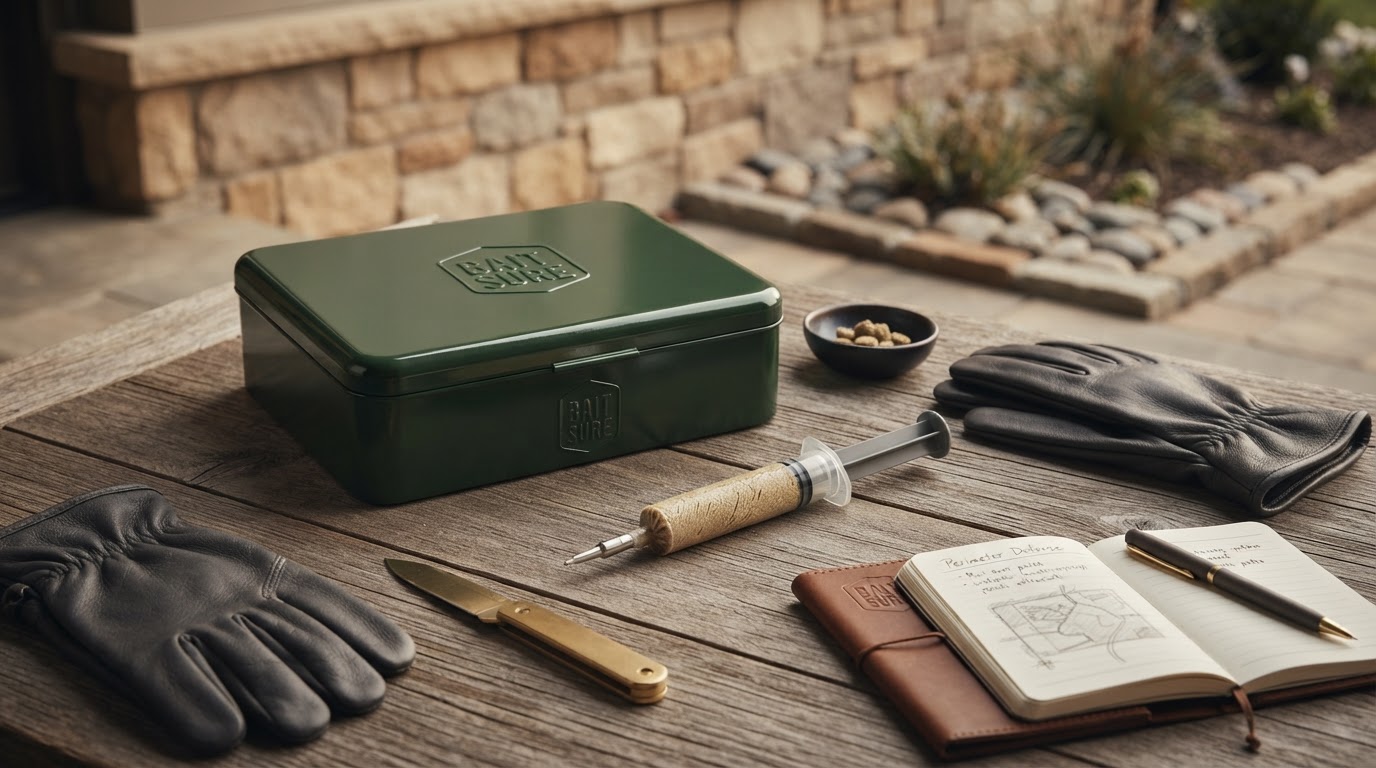
Bait Sure changes the physics of the encounter by utilizing a complex, oil-based scent profile that mimics the high-protein fats rodents crave in the wild. The texture is viscous, designed to adhere to triggers without drying out or losing its aromatic potency over time. When I first applied it, I noticed how the scent lingered in the air, a sharp contrast to the odorless synthetic baits I had used previously. This persistence is vital when you are learning how to bait a snap trap effectively, as the attractant must remain active for days or even weeks in fluctuating temperatures. The formula is engineered to be non-toxic, which is a major shift for commercial-grade products that historically relied on anticoagulants. Because Bait Sure focuses on the 'pull' rather than the 'kill,' it integrates seamlessly into various trapping systems. Whether you are using traditional mechanical devices or exploring humane mouse trap alternatives, the attractant serves as the primary motivator for the rodent to enter the mechanism. The high-fat content ensures that the scent molecules are heavy enough to travel across floor drafts, drawing rodents out from wall voids and behind appliances. This is particularly effective in large-scale environments where you cannot physically reach every possible nesting site. By creating a localized 'scent pillar,' the attractant brings the pest to the trap, rather than requiring the trap to be placed directly on top of the nest.
Selecting a commercial-grade attractant requires a framework that accounts for the specific environment and the behavior of the local rodent population. I keep coming back to the idea that consistency is more important than quantity. A small, pea-sized amount of Bait Sure placed strategically is far more effective than globs of peanut butter that can be licked off without triggering the mechanism. When evaluating your strategy, consider the following requirements for a successful deployment:
- Assess the competing food sources in the immediate area and remove as many as possible to increase the lure's profile.
- Ensure the attractant has a high oil content to prevent evaporation in dry environments like attics.
- Use non-toxic lures in areas where pets or children may have accidental access to the trap perimeter.
- Verify that the attractant is compatible with your specific trap trigger to prevent 'bait theft' without activation.
- Monitor the bait every 48 hours to check for activity and refresh the scent if dust has settled on the surface.
- Place traps along runways—walls and baseboards—where rodents naturally travel using their whiskers for guidance.