Bait Sure Indoor Protocols for Pet-Safe Ant Control
 Maya ChenContributing Editor
August 9, 2026. This technical assessment outlines the methodology for deploying indoor ant control measures that prioritize the safety of domestic animals. It is designed for homeowners who require effective pest elimination without compromising the health of cats, dogs, or other household pets.
The Failure of Chemical Safety Labels
The conventional wisdom says that "natural" or "pet-safe" sprays are the gold standard for indoor insect management. I find this premise fundamentally flawed because it ignores the chemistry of persistence and the behavioral patterns of pets. Most products marketed as safe for animals rely on essential oils or diluted pyrethrins. While these may have lower acute toxicity profiles than organophosphates, they often require frequent reapplication to remain effective. Here's the part nobody talks about: a "safe" chemical that must be sprayed every forty-eight hours creates a higher cumulative exposure risk than a high-efficacy bait that is physically isolated from the environment. According to the National Pesticide Information Center, even substances generally recognized as safe can cause respiratory distress or dermal irritation in sensitive breeds when applied as aerosols in confined spaces.
Furthermore, surface sprays do nothing to address the colony. They provide a temporary barrier that ants eventually circumvent. When homeowners attempt diy home pest control tips, they often fall into the trap of over-applying contact killers. This creates a false sense of security while the underlying infestation continues to thrive behind baseboards and inside wall voids. If the goal is actual eradication rather than a temporary reduction in visible workers, the focus must shift from surface treatments to targeted ingestion. Relying on the sheer volume of a "safe" spray is a losing game; the math simply doesn't support the efficacy-to-risk ratio. The true solution lies in containment, where the active ingredient is never accessible to the pet in the first place.
Bait Sure Containment Architecture
Photo by Neslihan Ercan on Pexels
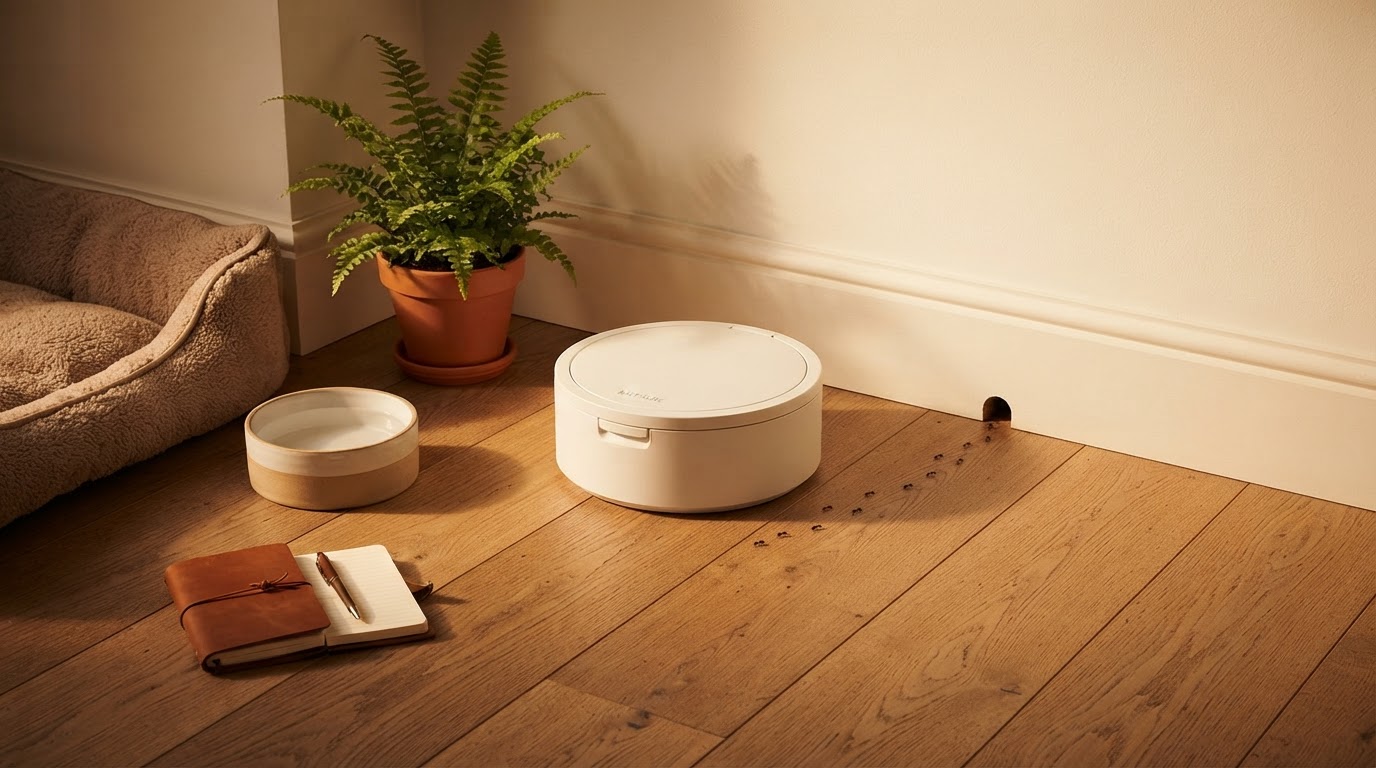
Bait Sure addresses the safety-efficacy paradox by utilizing a hardware-first approach. Instead of broadcasting chemicals across floors where pets walk and lick their paws, the system utilizes a long lasting insect bait station designed to keep the attractant enclosed. This physical barrier is the only reliable way to ensure a pet-safe environment. The stations are constructed from durable polymers that resist tampering from curious animals, ensuring that the bait remains localized. By utilizing a high-attractancy matrix, the system requires a significantly smaller volume of active ingredient compared to traditional broadcast methods. This precision is critical because it leverages the natural foraging behavior of ants to transport the control agent back to the queen, effectively neutralizing the colony at its source.
Unlike outdoor solutions such as the best rat poison for outdoor use, which must account for secondary poisoning in the food chain, indoor ant control is about preventing direct ingestion. The Bait Sure station design features entry ports sized specifically for Hymenoptera, effectively locking out larger non-target organisms. This mechanical isolation allows for the use of more potent, professional-grade attractants that would otherwise be risky in an open-air application. Run the math: one gram of isolated bait in a secured station provides more colony-lethal force than a liter of botanical spray distributed across 500 square feet of flooring. The engineering of the station itself is what provides the safety, not just the toxicity profile of the substance inside. This shift from chemical reliance to structural integrity is what separates professional-grade results from consumer-level compromises.
Framework for Indoor Pet Safety
Photo by cottonbro studio on Pexels
Transitioning to a pet-safe indoor protocol requires a systematic evaluation of the home environment. It is not enough to simply place a station and hope for the best; the deployment must be strategic to maximize ant recruitment while minimizing pet interaction. I'll change my mind when a spray-based solution can demonstrate colony elimination without leaving a detectable residue on household surfaces. Until then, a containment-based decision framework is the only logical path forward for pet owners. This framework prioritizes the physical placement of stations in areas where pets cannot reach, such as behind heavy appliances or inside cabinets, further layering the safety protocols already built into the hardware.
When implementing this system, follow these specific criteria to ensure maximum safety and efficacy:
- Identify high-traffic ant trails that are inaccessible to pets, such as the gaps behind refrigerators or under dishwashers.
- Secure all bait stations to the substrate using adhesive to prevent pets from batting them around as toys.
- Monitor the stations weekly to check for depletion and ensure the structural integrity of the housing remains intact.
- Combine indoor baiting with a perimeter check as part of your broader diy home pest control tips to reduce the pressure on indoor stations.
- Avoid using any supplemental aerosol sprays near the bait stations, as this can contaminate the bait and repel the ants you are trying to attract.
- Document the locations of all deployed stations to ensure they are accounted for during deep cleaning or home maintenance.